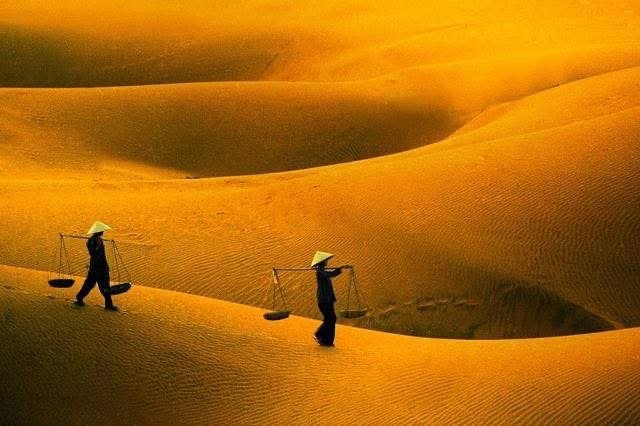
Mui Ne Sunset Photography offers warm golden light, colorful sand dunes and dramatic coastal skies. From the Red Sand Dunes to the Fishing Village, the afternoon landscape provides excellent opportunities for silhouettes, portraits and wide scenic compositions.
The minutes before sunset are excellent for golden portraits and long shadows. After sunset, the sky may briefly develop orange, pink or purple tones. Cloudy weather does not always mean poor photography because broken clouds can create some of the most dramatic images.
Best Mui Ne Sunset Photography Locations
Red Sand Dunes
The Red Sand Dunes are one of the most convenient places for sunset photography. Their warm sand becomes richer in late-afternoon light, while dune ridges create clean lines and natural shadows. Walk beyond the busiest entrance area when possible, but avoid damaging the dunes or disturbing local visitors.
Mui Ne Fishing Village
The Fishing Village offers a completely different composition. Hundreds of colorful boats can fill the foreground while the changing sky adds atmosphere. An elevated roadside viewpoint provides a broad view, while the shore below is useful for closer documentary-style photographs of local coastal life.
Coastal Road and Open Viewpoints
The Mui Ne Coastal Road has several open views where the sea, road and surrounding landscape can be included in one frame. Choose a safe stopping place and never stand in traffic for a photograph.
Best Time for Mui Ne Sunset Photography
Plan to reach the main sunset location approximately 30–45 minutes before sunset. This gives you time to walk around, study the light and choose a composition without rushing. The exact sunset time changes throughout the year, so check the local forecast on the day of your visit.
The Mui Ne sunset Jeep tour departs at 14:00, allowing time to visit several attractions before the final sunset stop.
| Light | Best Subjects | Photo Idea |
|---|---|---|
| Before golden hour | Jeep, landscape and people | Bright scenic photographs |
| Golden hour | Portraits and dune patterns | Warm light and long shadows |
| After sunset | Sky and silhouettes | Colorful, dramatic compositions |
Camera Settings for Sunset Photos
For a camera, begin with a low ISO such as ISO 100 or 200 when there is enough light. Apertures between f/8 and f/11 can keep a wide landscape sharp. As the light fades, reduce the shutter speed or increase ISO gradually. Check the highlights so the brightest part of the sky is not completely overexposed.
A tripod is useful after sunset but is not essential. Modern cameras and phones can produce excellent handheld images when used carefully. Clean the lens before shooting because fine sand and fingerprints become especially visible when photographing toward bright light.
Phone Photography Tips
Tap the brightest part of the sky and lower the exposure slightly to preserve color. Turn on the composition grid, keep the horizon straight and avoid excessive digital zoom. Try both the standard and wide lenses, but compare the results because some ultra-wide lenses may reduce detail in low light.
Use HDR or the phone’s automatic night mode when appropriate, but also take a normal photograph. Hold the phone firmly with both hands and take several frames because people, clouds and light change quickly.
Creative Sunset Compositions
Use dune ridges as leading lines and place a person or Jeep in the frame to show scale. For silhouettes, position the subject against the brightest section of the sky. Leave enough open space around the subject so the shape remains clear.
Do not photograph only toward the sun. Turn around and observe how warm light falls across the dunes, boats and people. These side-lit scenes often preserve more detail and may become the strongest photographs of the afternoon.
Mui Ne Sunset Photography Safety
Sand can be hot, soft and difficult to walk on, so wear secure footwear and carry water. Protect cameras from blowing sand and avoid changing lenses during strong wind. Watch for ATVs, Jeeps and other visitors, especially near busy dune access routes.
Respect local residents and ask permission before taking close portraits. Avoid blocking fishermen, vehicles or other photographers. Sunset fades quickly, so return to your vehicle before the area becomes difficult to navigate safely.
Sunrise or Sunset Photography?
Sunrise generally offers cooler air, softer early light and fewer visitors. Sunset is more convenient for travelers who prefer an afternoon departure and warmer tones. For a detailed comparison, read our Mui Ne Sand Dunes Sunrise Photography guide.
You can also explore our Mui Ne Jeep Tour Photography Tips and Mui Ne Jeep Photo Spots before planning your trip.
Combine Photography with a Sunset Jeep Tour
Combining Mui Ne Sunset Photography with a Jeep Tour provides convenient transport between the major attractions without requiring you to arrange separate taxis. The usual route may include the White Sand Dunes, Red Sand Dunes, Fishing Village and Fairy Stream, although the order can change according to local conditions.
Shared tours cost $8 per person, while a private Jeep costs $30 for 1–6 guests. Free hotel pickup and drop-off are included within Ham Tien and Mui Ne; locations outside this area may require a meeting point or surcharge. ATV rides and sandboarding are optional and paid separately. No deposit is required, and you can pay later.
For official destination information, visit the Vietnam Tourism website.
Join the 14:00 shared tour for $8 per person, or reserve a private Jeep for $30 for 1–6 guests. Free pickup within Ham Tien and Mui Ne, no deposit and pay later.