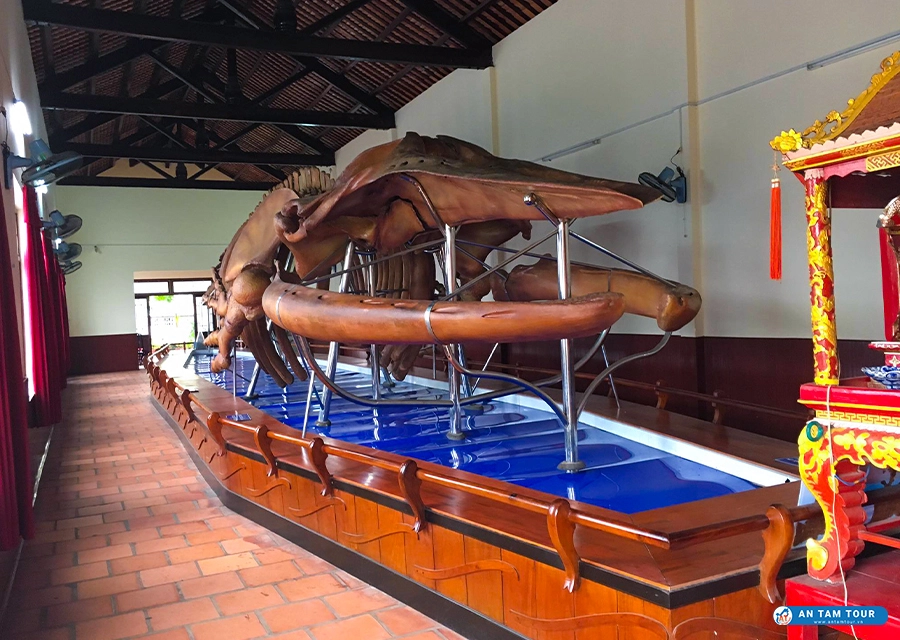
Van Thuy Tu Temple is one of the most distinctive cultural attractions in central Phan Thiet. The historic site introduces visitors to the coastal community’s tradition of whale worship and displays an exceptionally large preserved whale skeleton.
It is a useful addition to a Mui Ne itinerary for travellers interested in local history, fishing culture and places beyond the sand dunes. Guests can arrange a private Jeep from their hotel in Mui Ne or Ham Tien, with the transportation price negotiated in advance.
Allow approximately 45–60 minutes for a relaxed visit to Van Thuy Tu Temple, excluding transportation from Mui Ne. Our private Jeep can take guests to the temple by advance arrangement. The price depends on the pickup location, route, waiting time and any additional stops. Admission, meals and other personal expenses are separate.
Why visit Van Thuy Tu Temple?
Many travellers know Phan Thiet and Mui Ne for beaches, kitesurfing and sand dunes. Van Thuy Tu offers a different experience by showing the relationship between local fishing communities, the sea and the traditional worship of whales, respectfully called “Ca Ong” by many Vietnamese coastal communities.
The temple is compact enough to visit without spending an entire day. It is suitable for history lovers, families, photographers and travellers who want to understand more about the local culture behind Phan Thiet’s fishing industry.
The preserved skeleton is the best-known feature, but the surrounding worship spaces, historic objects and traditional architecture also deserve attention. Visitors should approach the site as a religious and cultural place rather than only as a museum.
History and cultural importance
Van Thuy Tu Temple dates from the eighteenth century and is closely connected to generations of fishermen in Phan Thiet. The complex serves as a place of worship and community memory associated with the sea.
In Vietnamese coastal tradition, whales are respected for stories of assisting fishermen and boats during dangerous sea conditions. This belief developed into local ceremonies and places of worship in several coastal provinces.
The temple preserves cultural objects, records and royal decrees associated with its long history. It also remains connected to local religious activities, so some areas may be used for worship or community events during your visit.
Official tourism information describes Vạn Thủy Tú as an important Phan Thiet attraction and part of Binh Thuan’s distinctive coastal culture. Visitors can consult the Binh Thuan tourism information page for additional background.
The famous whale skeleton
The most memorable display at Van Thuy Tu Temple is its enormous preserved whale skeleton. Official tourism references describe it as approximately 22 metres long and among the largest whale skeletons preserved in Vietnam.
The skeleton allows visitors to appreciate the scale of these marine animals from very close range. Its long jaw, ribs and vertebrae extend across the display area and create a striking introduction to marine anatomy.
For local people, however, the skeleton has meaning beyond its physical size. It represents the spiritual connection between fishermen and the sea, as well as the respect shown to whales that washed ashore along the coast.
Take photographs only where permitted. Flash photography, touching the display or crossing protective barriers may be restricted. Follow the instructions of staff even when another visitor is doing something different.
What to see at Van Thuy Tu Temple
The main worship area
The main temple area contains altars and traditional decorative details. Visitors may see red and gold colours, incense holders, carved woodwork and objects associated with coastal beliefs.
The whale skeleton display
This is the main reason many international travellers visit. Walk slowly around the available viewing area to see the skull, jaw, ribs and spine from different positions.
Historic objects and documents
The complex preserves objects connected to local history and religious practice. Information in English may be limited, so reading some background before visiting can make the experience more meaningful.
The surrounding Phan Thiet neighbourhood
The temple is located in an established part of Phan Thiet rather than inside a modern resort zone. The nearby streets provide a glimpse of everyday city life, local businesses and the area’s fishing heritage.
Getting to Van Thuy Tu Temple from Mui Ne
Travel time varies according to the location of your hotel. Guests staying in central Ham Tien or Mui Ne must travel toward Phan Thiet city, while those staying closer to Phu Hai may have a shorter journey.
Common transportation choices include:
- Private Jeep: Hotel pickup, an agreed waiting period and a return journey can be arranged in advance.
- Taxi or private car: A practical option for travellers visiting only the city centre.
- Motorbike: Appropriate for confident riders familiar with Vietnamese traffic.
- Combined city tour: Useful for visiting several Phan Thiet attractions during one journey.
Check the destination carefully before departure because online maps may use different English spellings, including Van Thuy Tu, Van Thuy Tu Temple or Dinh Van Thuy Tu.
Private Jeep to Van Thuy Tu Temple
Our Jeep can transport guests from a hotel in Mui Ne or Ham Tien to Van Thuy Tu Temple. This is arranged as a private journey and is separate from the regular Sunrise and Sunset Jeep Tours.
The price is negotiated before confirmation because the required journey can vary. To receive an accurate quotation, provide:
- Your hotel or exact pickup location.
- Your preferred travel date.
- The number of guests.
- Your requested departure time.
- Whether you require a one-way or return transfer.
- Your expected waiting time at the temple.
- Any additional attractions you would like to visit.
After receiving these details, we can confirm availability and agree on a price. Guests should keep the confirmed contact available on their phone in case the pickup point or return time needs clarification.
Places to combine with Van Thuy Tu Temple
Po Sah Inu Cham Towers
The Cham towers offer another important view of regional history and architecture. Combining the two attractions creates a varied cultural trip. Read our Po Sah Inu Cham Towers guide before planning the route.
Phan Thiet Market
The central market can be interesting for travellers who want to see local produce, seafood and daily commercial activity. It can become busy, so keep personal belongings secure and ask before taking close photographs of vendors.
Phan Thiet Water Tower
The water tower is a recognisable city landmark and can be viewed during a drive through central Phan Thiet. It is generally a brief photography stop rather than a long attraction.
Local lunch or coffee
A meal stop can make the journey more relaxed, especially for families. Discuss the expected waiting time before confirming the Jeep price so that the driver understands your complete plan.
Ke Ga Lighthouse
Ke Ga is farther south and requires significantly more travel time. Combining it with Van Thuy Tu creates a longer journey and may involve separate boat arrangements. See our Ke Ga Lighthouse from Mui Ne guide for planning information.
Best time to visit
Morning
Morning is generally comfortable for travelling from Mui Ne and leaves enough time for other Phan Thiet attractions. It is also convenient for adding a lunch stop before returning to the hotel.
Late afternoon
A late-afternoon visit may be suitable if you only want a short city journey. Confirm the current closing time before leaving Mui Ne because opening arrangements can change during holidays, ceremonies or maintenance.
Festival and ceremony periods
Religious events can offer a deeper cultural experience, but the temple may also be busier and some spaces may be reserved for ceremonies. Visitors should dress respectfully and follow local instructions.
Avoid relying on old online information for exact opening hours or admission prices. Ask locally or confirm shortly before the visit.
What is included and paid separately?
| Item | Arrangement | Important information |
|---|---|---|
| Private Jeep and driver | Price negotiated in advance | Depends on pickup, route and waiting time |
| Hotel pickup and return | Included when stated in the quotation | Provide the exact hotel name |
| Temple admission | Paid separately if applicable | Confirm the current charge locally |
| Meals and drinks | Paid by the guest | Tell us if the Jeep must wait during lunch |
| Additional attractions | Quoted or paid separately | Agree on all stops before departure |
| Guide or detailed interpretation | Not automatically included | Private Jeep service normally includes a local driver |
Temple etiquette and practical tips
- Wear clothing that covers the shoulders and upper legs.
- Remove hats when entering a worship area if requested.
- Speak quietly and keep mobile-phone sounds low.
- Do not touch altars, historic objects or the whale skeleton.
- Ask before photographing worshippers or ceremonies.
- Follow all photography signs and staff instructions.
- Carry some Vietnamese cash for admission or small purchases.
- Supervise children closely around displays and religious objects.
- Allow extra transportation time during busy traffic periods.
- Confirm your return pickup location with the driver.
Families can visit comfortably, but parents should explain that the skeleton and worship spaces are culturally significant. Senior travellers may prefer a private vehicle because it reduces walking and allows a flexible return time.
Frequently asked questions
Can your Jeep take guests from Mui Ne to Van Thuy Tu Temple?
Yes. Private Jeep transportation can be arranged in advance. Send your hotel, date, number of guests, preferred departure time and requested itinerary for a quotation.
How much does the private Jeep cost?
The price is negotiated according to the pickup location, route, waiting time and additional stops. It is not the same as the standard $30 private sand-dune tour.
Is the temple included in the regular Mui Ne Jeep Tour?
No. The standard Jeep Tour follows the sand-dune itinerary. Van Thuy Tu requires a separate private transportation arrangement.
How long should I spend at the temple?
Approximately 45–60 minutes is suitable for most visitors. History enthusiasts or guests visiting during a cultural event may want more time.
Is there an entrance fee?
A local admission charge may apply. Prices and procedures can change, so confirm the current information at the site rather than relying on an old online price.
Is the temple suitable for children?
Yes, especially for children interested in marine life. Parents should supervise them and make sure they do not touch the skeleton, displays or religious objects.
Can I combine the temple with Po Sah Inu Cham Towers?
Yes. These two attractions can form a practical cultural trip around Phan Thiet. Agree on the route and waiting time before confirming your private Jeep.
Can we book the Jeep on the same day?
Same-day transportation depends on vehicle availability. Booking in advance is recommended, especially for weekends, holidays or trips with several stops.
Final visitor advice
Van Thuy Tu Temple provides a valuable introduction to Phan Thiet’s fishing culture and traditional respect for whales. Its historic worship spaces and remarkable skeleton display offer an experience very different from Mui Ne’s beaches and sand dunes.
Arrange your private Jeep in advance, agree on the complete route and price, and confirm current opening information before departure. With a comfortable schedule, the temple can be combined with other Phan Thiet attractions without turning the day into a rushed journey.
Request a Private Jeep to Van Thuy Tu
Send us your hotel, travel date, number of guests and preferred stops. The price is agreed in advance according to pickup location, route and waiting time. Admission and personal expenses are separate.